
Zeus
sky and order
Ruler of the gods, linked to the sky, thunderbolt, law and hospitality.
GREEK MYTHOLOGY
A simple journey through stories that helped ancient Greeks read the sky, the sea, nature and human character.
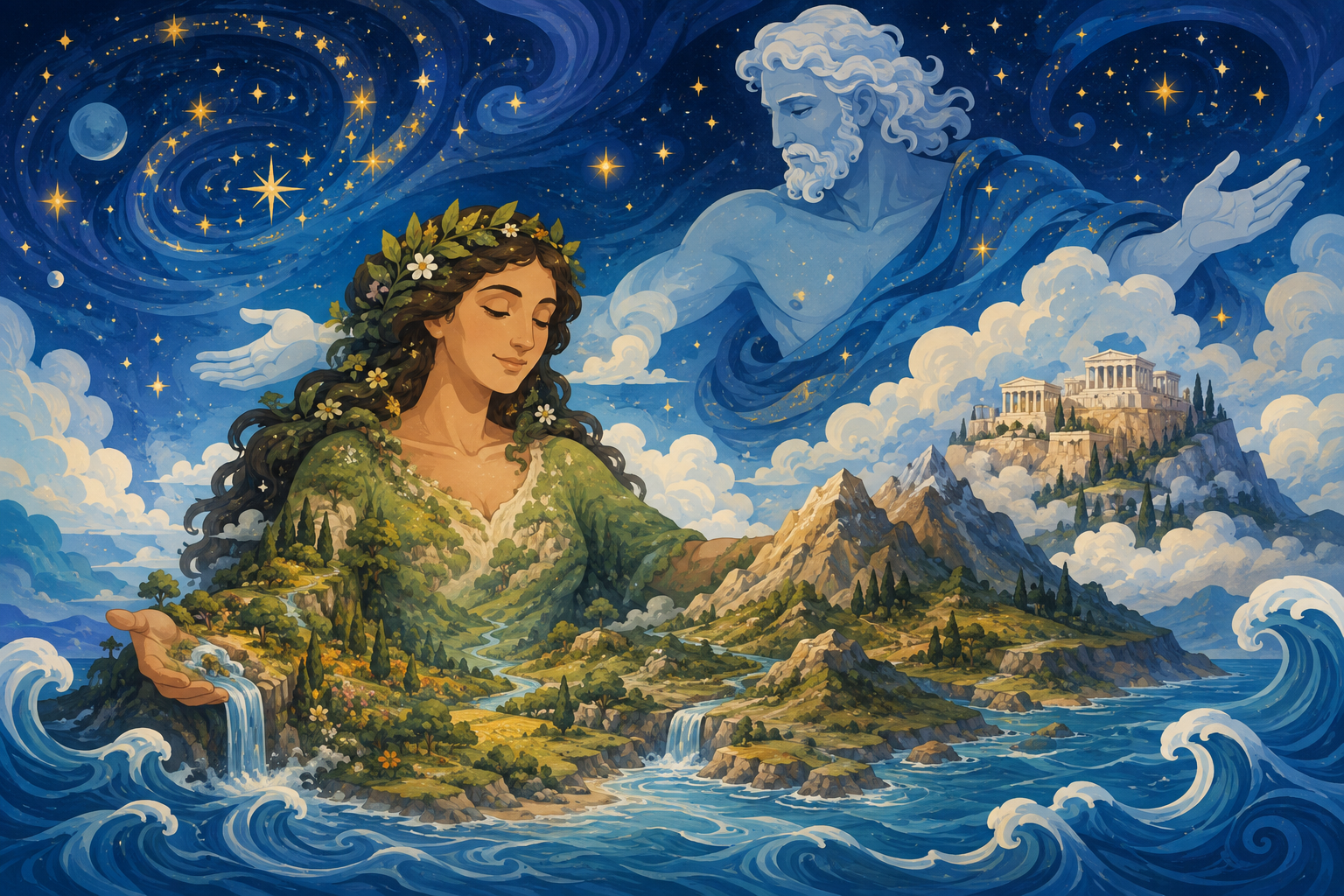
The oldest stories imagine a cosmos still taking shape. Gaia, the Earth, gives rise to divine generations; from them come the Titans and later the Olympian gods. There was never one final version: myths travelled through oral poetry, theatre and images.
The gods are not simple superheroes. They have powers, desires, alliances and flaws. Each figure also reflects a force of nature, a human activity or a question about fate.
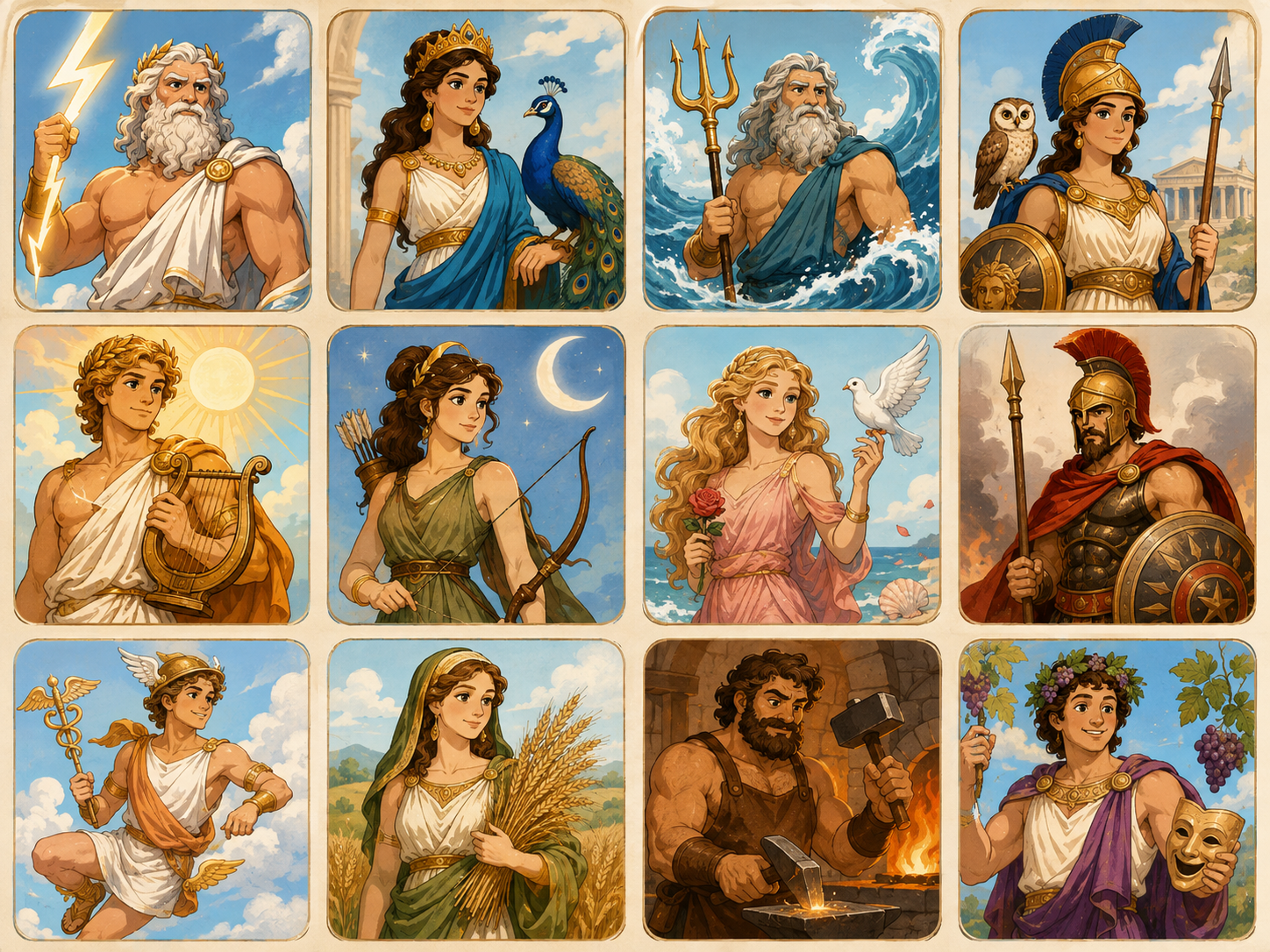
sky and order
Ruler of the gods, linked to the sky, thunderbolt, law and hospitality.
marriage and family
Queen of Olympus, protector of marriage and family life.
sea and earthquakes
With his trident he rules the sea and the unpredictable forces of earth.
wisdom and strategy
Goddess of wisdom, craft and strategy, protector of Athens.
light, music and prophecy
A figure of music, poetry, healing, prophecy and harmony.
nature and hunting
Goddess of wild nature and hunting, protector of animals.
love and beauty
She represents desire, beauty and the force that attracts gods and mortals.
conflict and war
He embodies the impulsive and violent side of war, unlike Athena’s strategy.
travel and messages
Messenger of the gods, he guides travellers, merchants and souls.
earth and harvest
Linked to the fertility of the earth and the cycle of the seasons.
fire and invention
Divine smith who turns fire into weapons, tools and wonders.
wine and theatre
God of wine, celebration and theatre, symbol of creative freedom.
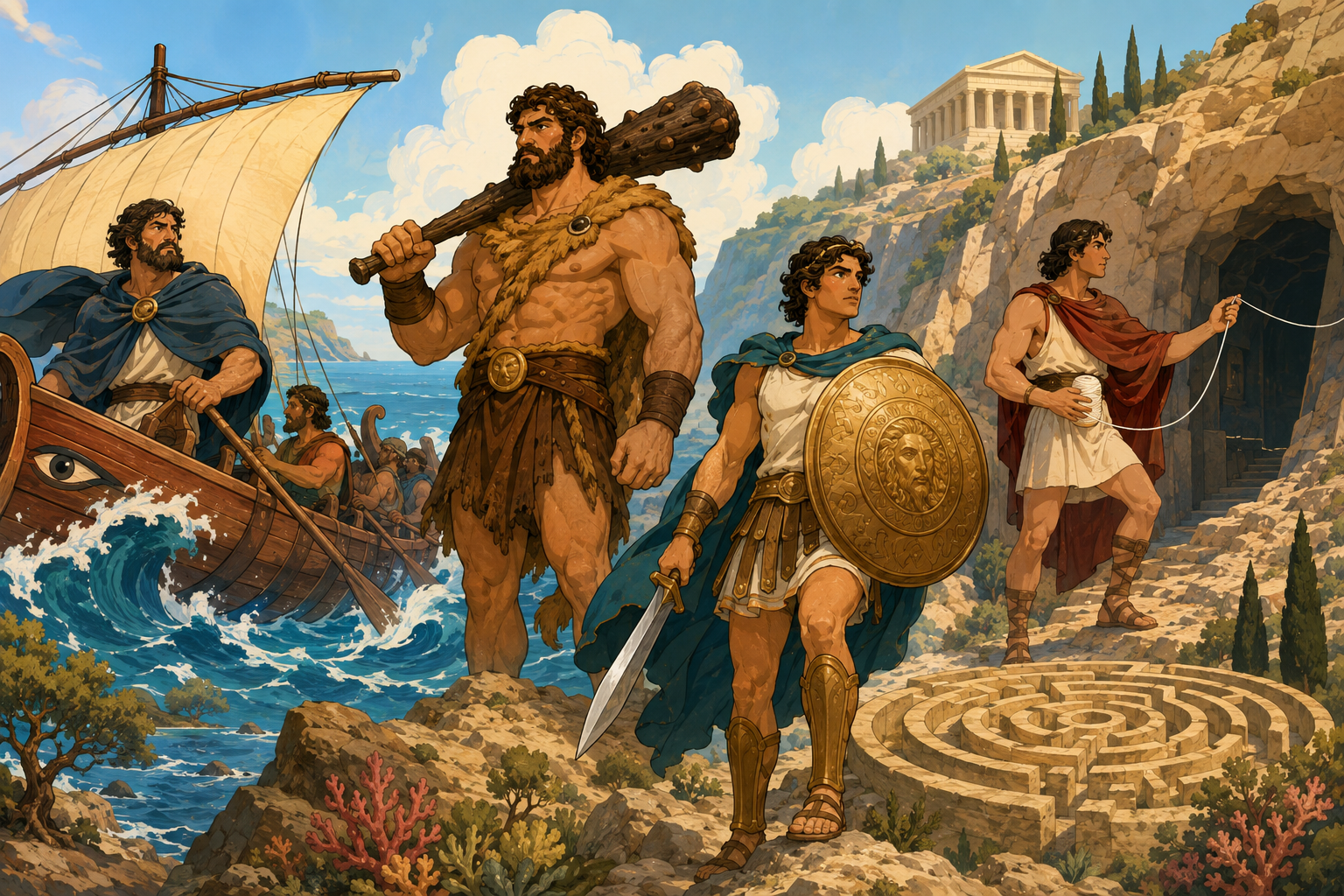
Heracles, Perseus, Theseus and Odysseus face monsters, labyrinths and distant seas. Their journeys explore courage, intelligence, responsibility, loss and return.
Gods, Titans and mythical beings that complete the map of Greek imagination.
underworld
King of the Underworld and keeper of the realm of the dead; his myth is linked to Persephone.
seasons
Queen of the Underworld and daughter of Demeter, her return explains nature’s rhythm.
desire
Winged figure of desire, able to bring gods and mortals together with his arrows.
primordial earth
Personified Earth, origin of divine generations and symbol of life beginning.
Titan of time
Titan of the first generation, father of the Olympians and central figure of the Titanomachy.
Gorgon
One of the Gorgons, known for her snake hair and petrifying gaze.
winged horse
Winged horse born from the myth of Medusa, symbol of freedom and imagination.
guardian of the Underworld
The three-headed dog guarding the entrance to Hades’ realm.
From the late eighteenth century, scholars increasingly studied myths as cultural documents rather than simple fables. Philology, comparison between cultures, anthropology and psychology offered different lenses: symbols, recurring structures, social roles and possible historical traces.
These are scholarly perspectives; no single theory explains every part of the stories.
Mythology remains alive in art, literature, film, place names and language. Learning it helps us understand Greece’s cultural heritage.
Explore Greek history